Car Rental Operations 8 min read
Electric Vehicle Fleet Adoption in the UAE: A Guide for Rental Operators
A strategic guide for UAE car rental operators integrating electric vehicles, covering charging infrastructure, unit economics, and EV damage recovery.
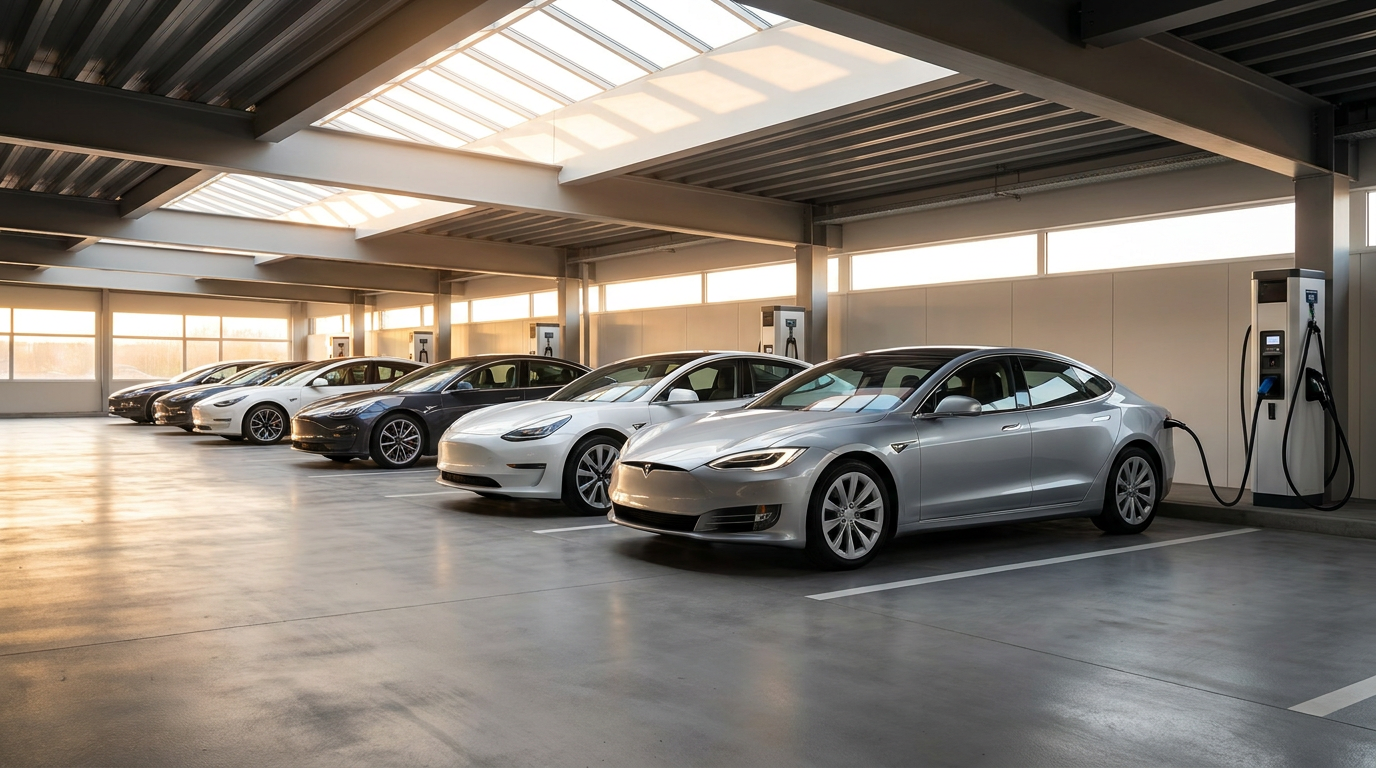
You cannot ignore the shifting unit economics of passenger vehicles in the Gulf. For car rental operators, electric vehicle fleet adoption UAE represents both a significant margin opportunity and a distinct operational challenge. You must balance the immediate demands of charging infrastructure with the long-term benefits of lower total cost of ownership.
Fleet operators who manage this transition correctly will capture market share from a growing segment of environmentally conscious consumers and corporate renters. Those who treat an EV exactly like an internal combustion engine (ICE) vehicle will face unacceptable downtime and compromised margins.
The State of Electric Vehicle Fleet Adoption in the UAE
The transition from pilot projects to scaled deployment is already underway across the Gulf. Government mandates such as UAE Net Zero 2050 are accelerating the shift, forcing mobility providers to re-evaluate their asset mix. You are operating in a market where early movers are actively securing the infrastructure required to scale.
Commercial Fleet Electrification vs. Consumer Adoption
Commercial fleets are electrifying at a faster rate than private consumers. This shift occurs because the total cost of ownership (TCO) for fleet operators becomes increasingly attractive as vehicle utilisation rises projected to reach USD 31.66 Billion by 2031 [2]. Electrifying commercial fleets in the UAE requires boosting demand alongside building fit-for-purpose charging solutions to resolve fleet electrification challenges [10].
Commercial operators calculate profitability based on vehicle uptime and daily running costs. Electric vehicles, despite higher acquisition prices, offer significant reductions in fueling and routine maintenance costs compared to traditional ICE assets.
Projected UAE Rental Market Growth
The broader UAE car rental market was estimated at nearly USD 2.5 billion in 2024 and is forecast to reach USD 5.2 billion by 2030 [6]. Integrating EVs into this rapidly expanding market offers a lucrative opportunity, provided you can solve the operational complexities.
Dubai serves as the principal hub for this integration. The emirate registered nearly 48,000 electric vehicles by the end of 2025 [11]. This dense, early-adopter market gives fleet managers a testing ground to refine utilisation strategies before rolling out EVs to regions with lighter infrastructure.
Navigating EV Charging Infrastructure Challenges in the GCC
The primary barrier to passenger EV adoption in the Middle East is limited public charging infrastructure outside major urban centres [3]. You cannot rely entirely on municipal grids to keep a fast-turnaround rental fleet operational.
Public vs. Depot Charging Solutions
While Dubai has expanded its network to over 1,860 charging points [11], sending staff to public stations kills operational efficiency. Rental operators must install direct current (DC) fast chargers or multiple alternating current (AC) units at their own depots.
Depot charging guarantees that returning vehicles are turned around quickly for the next booking. Without controlled, in-house infrastructure, your fleet utilisation rates will plummet as cars sit idle waiting for available public bays.
Managing Vehicle Downtime and Grid Strain
Simultaneous high-speed charging of multiple fleet vehicles places immense strain on local power networks. Charging schedules must be managed intelligently to avoid peak tariffs and potential grid overloads.
- Stagger charging times based on upcoming rental reservations.
- Prioritise DC fast charging only for immediate turnarounds.
- Utilise AC slow chargers overnight to protect battery longevity.
Synchronising Solar and eMobility
Given vehicles remain parked for extended periods, industry experts propose synchronising daytime EV charging with solar generation. This strategy significantly reduces charging costs and helps avoid grid strain [4]. Installing solar canopies at your depot directly offsets the highest variable cost of your EV fleet.
Unit Economics and Profitability of EV Rental Fleets
Understanding the financial model of an electric fleet requires looking past the showroom price. The unit economics hinge entirely on how effectively you deploy the asset over a 24- to 36-month holding period.
Upfront Costs vs. Total Cost of Ownership (TCO)
The initial acquisition costs for leading EV brands like BYD and Tesla remain a hurdle [3]. However, the lower ongoing operational costs dramatically alter the total cost of ownership. Operators who track per-kilometre expense heavily favour EVs for high-utilisation corporate leases and long-term rentals.
| Cost Category | ICE Fleet Vehicles | Electric Fleet Vehicles |
|---|---|---|
| Acquisition Cost | Lower baseline cost | Higher upfront investment |
| Maintenance Frequency | High (oil changes, filters, belts) | Low (fewer moving parts, software updates) |
| Fuel/Energy Cost | Subject to fuel price fluctuations | Predictable, lower cost per km (especially with solar) |
Addressing Battery Degradation in Rental Assets
Frequent fast-charging degrades EV batteries faster than slow, overnight charging. For rental operators, battery health directly impacts the vehicle's residual value upon de-fleeting. You must implement software tools that monitor battery state-of-health and mandate slower charging protocols when rapid turnarounds are unnecessary.
Maximizing Fleet Utilization Rates
Vehicle downtime during charging is the enemy of profitability. You must align your reservation systems with vehicle telematics. By knowing exactly what percentage of charge a vehicle returns with, your depot staff can prioritise which cars hit the fast chargers and which are prepped for bookings later in the week.
Risk Management and EV Damage Recovery Processes
Electric vehicles introduce entirely new risk profiles to your fleet. The components are expensive, the repair networks are still developing, and minor undercarriage damage can result in total battery replacement.
Why EV Repairs Carry Higher Complexities
Repairing an EV is not as simple as fixing a dented bumper on an ICE sedan. Any impact near the battery pack requires specialised diagnostics by certified technicians. This complexity extends the time your asset spends in the repair shop, increasing loss of revenue.
Adapting Rental Agreements for EV Assets
Traditional rental agreements rarely account for the specific vulnerabilities of electric platforms. You must update your terms to clearly define renter liability regarding charging cables, battery depletion requiring a tow, and specific underbody damage.
Modernizing Fleet Protection for Electric Vehicles
The traditional security deposit falls short when dealing with expensive EV components. You must implement robust damage recovery processes tailored to the actual cost of electric vehicle repairs [6]. End-to-end recovery solutions safeguard your bottom line without burdening the renter with massive upfront blockages on their credit cards.
Strategic Next Steps for UAE Fleet Managers
Electric vehicle fleet adoption UAE is not a future concept; it is an immediate operational requirement. You must begin testing these assets within your infrastructure to remain competitive as commercial demand shifts toward sustainable transport.
Phased Rollouts in High-Density Areas
Start your electrification in infrastructure-rich environments. Dubai’s dense network of early adopters provides the ideal conditions to pilot an EV fleet. You can gather data on charging times, customer acceptance, and actual maintenance costs before expanding to other emirates.
Forming Strategic Mobility Partnerships
You do not need to navigate this transition alone. Look at recent industry moves, such as Udrive partnering with AGMC to add MINI vehicles to their fleet [5]. Strategic partnerships with dealerships and charging providers will secure better acquisition rates and guarantee priority infrastructure access.
Frequently Asked Questions About EV Fleet Adoption in the UAE
What is the current market size and growth rate for EVs in the GCC?
The GCC electric vehicle market is currently in a rapid expansion phase. Estimates suggest the market size will reach roughly USD 11.64 billion by 2026, and it is projected to grow to USD 31.66 billion by 2031, representing a strong Compound Annual Growth Rate (CAGR) of 22.15%.
Is the public charging infrastructure in the UAE sufficient for a purely electric rental fleet?
While Dubai's public charging network has expanded significantly—reaching an estimated 1,860 points—relying solely on public infrastructure poses operational challenges. Rental fleets must invest in fit-for-purpose depot charging to avoid excessive vehicle downtime and ensure rapid turnaround for the next customer.
How fast are commercial fleets adopting EVs compared to private consumers?
Commercial fleets in the UAE are electrifying at a faster rate than private consumer vehicles. The transition is heavily driven by clear total cost of ownership (TCO) benefits, sustainability mandates like UAE Net Zero 2050, and concerted efforts to resolve operational scaling challenges.
What are the main operational challenges when adding EVs to a rental fleet?
The primary challenges include managing higher upfront vehicle acquisition costs, navigating limited public charging infrastructure outside of major hubs like Dubai, mitigating battery degradation over time, and adjusting damage recovery processes for more complex, expensive EV repairs.
How many registered electric vehicles are currently operating in Dubai?
Dubai remains the principal hub for electric vehicle adoption in the UAE. By the end of 2025, there were nearly 48,000 registered electric vehicles operating in the emirate, providing a dense, early-adopter market for rental operators to test and scale EV fleets.